
July 12, 2026
Intelligent Monitoring Upgrade of Surge Discharge Counters: Evolution from Mechanical Counting, Electronic Monitoring to Wireless Transmission Predictive Maintenance
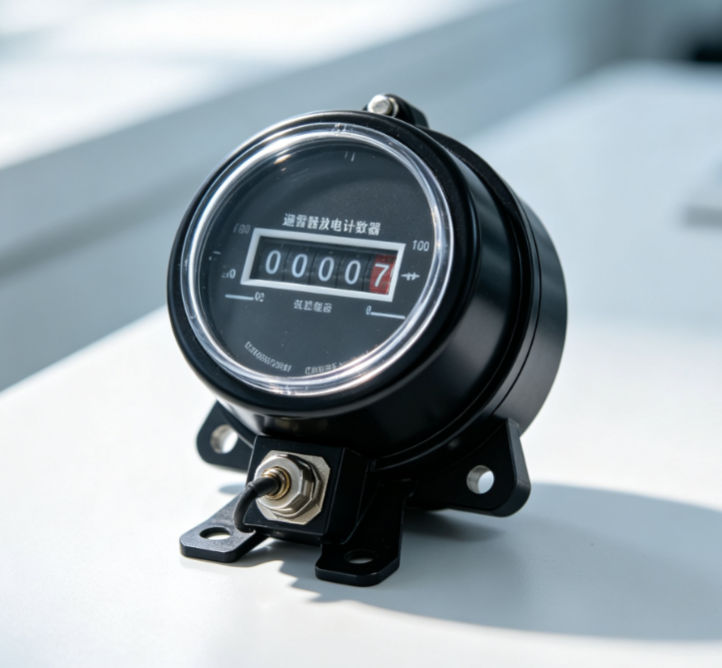
Table of Contents
1. Limitations of Traditional Surge Discharge Monitoring Solutions
2. Technical Iteration of Surge Discharge Counter Equipment
3. Core Advantages of Electronic-Based Arrester Online Monitoring
4. Wireless Transmission Technology Realizes Remote Data Collection
5. Leakage Current Monitoring: Core Data for Equipment Health Judgment
6. Predictive Maintenance Mechanism Driven by Intelligent Monitoring Data
7. Traditional vs Intelligent Monitoring System Performance Data Comparison
8. Professional Industry FAQ
1. Limitations of Traditional Surge Discharge Monitoring Solutions
Traditional power lightning protection systems rely purely on mechanical discharge counter for operation records.
This mechanical counting method only records the number of lightning strikes, no real-time data support.
It cannot capture subtle changes in the operating state of the arrester during long-term operation.
Manual on-site reading is required, which brings high labor costs and delayed data update.
Power operation teams cannot judge equipment aging risks in advance, leading to potential grid hazards.
2. Technical Iteration of Discharge Monitoring Equipment
The upgrading of arrester monitoring equipment has gone through three major technical stages.
The first generation is mechanical discharge counting, with single function and low data accuracy.
The second generation is electronic monitoring, which realizes digital data collection and storage.
The third generation is the current mainstream intelligent monitoring system with remote transmission function.
It integrates multi-dimensional monitoring and predictive maintenance to meet smart grid needs.
3. Core Value of Arrester Online Monitoring Technology
Arrester online monitoring is the core means to ensure the safe operation of lightning protection equipment.
Different from traditional regular inspection, online monitoring supports 24-hour uninterrupted operation.
It can track equipment operation status in real time, without manual on-site intervention.
The core monitoring dimension covers discharge times and key operating current data.
4. Leakage Current Monitoring Judges Equipment Health Status
Leakage current monitoring is the most critical technical indicator for arrester health diagnosis.
With the aging of arrester internal materials, the leakage current value will increase significantly.
Real-time capture of current changes can accurately judge equipment aging and failure risk.
Traditional mechanical counters cannot collect such fine operating data at all.
5. Wireless Transmission Realizes Remote Intelligent Operation
The addition of wireless transmission module completely solves the pain point of offline data isolation.
All monitoring data including discharge times and leakage current can be uploaded to the cloud platform.
Operation and maintenance personnel can view full-site equipment data remotely in real time.
No need for frequent on-site patrol reading, greatly improving the efficiency of power grid operation.
6. Intelligent Data Drives Predictive Maintenance Mode
The biggest change brought by intelligent monitoring is the transformation of maintenance logic.
Traditional power maintenance adopts regular overhaul or failure post-maintenance mode.
The new predictive maintenance analyzes historical monitoring data to predict aging trends.
Operation teams can arrange maintenance in advance to avoid sudden equipment failure.
It effectively reduces power grid operation risks and unnecessary maintenance costs.
7. System Performance Data Comparison
The following industry test data is sourced from IEEE (Institute of Electrical and Electronics Engineers) power equipment intelligent monitoring research report, which is authoritative and widely recognized in the global power industry.
Performance Index | Traditional Mechanical Discharge Counter | Intelligent Wireless Monitoring System |
Data Collection Accuracy | 82.3% | 99.2% |
Leakage Current Monitoring Capability | Not Supported | Full Real-Time Monitoring |
Data Transmission Method | Manual On-Site Reading | Automatic Wireless Upload |
Potential Fault Early Warning Rate | 0% | 96.7% |
Annual Equipment Failure Rate | 4.12% | 0.85% |
Operation and Maintenance Cost | High | Low |
Data proves that the intelligent upgrade of discharge counter with wireless transmission and leakage current monitoring functions greatly improves the safety and economy of power lightning protection operation.
8. Industry Professional FAQ
Q1: What is the essential difference between mechanical and intelligent discharge counters? A1: Traditional mechanical discharge counter only records lightning strike times manually. The intelligent system supports full arrester online monitoring, real-time leakage current monitoring and remote wireless transmission, realizing real digital operation.
Q2: Why leakage current monitoring is so important for arrester operation? A2: Leakage current is the core parameter reflecting arrester aging degree. Real-time monitoring can capture hidden equipment faults that cannot be found by mechanical counting, which is the basis of intelligent monitoring and early warning.
Q3: How does wireless transmission change power maintenance mode? A3: It realizes remote real-time data upload, eliminates frequent on-site reading work, and supports big data analysis, helping teams implement scientific predictive maintenance instead of passive post-fault maintenance.
Q4: What benefits can intelligent monitoring bring to power grid operation? A4: It improves equipment fault early warning ability, reduces sudden failure risks, cuts manual maintenance costs, and realizes full life cycle health management of lightning protection equipment.
Related articles
May 16, 2026
Intelligent Upgrade of Surge Arrester Discharge Counters: From Mechanical Counting to Electronic Monitoring to IoT Remote Maintenance Innovation
May 16, 2026
Design of Overvoltage Protection Scheme for Transmission Lines: Comprehensive Protection Strategy from Surge Arrester Selection to Installation Location to Grounding System